


Whenever economic uncertainty increases, entrepreneurs tend to focus on external factors.
They watch interest rates, market trends, consumer spending habits, and industry forecasts. They pay attention to headlines and economic indicators, hoping to identify what might happen next and how it could impact their business.
While those concerns are understandable, they often distract leaders from a more important question.
Is my business model built to withstand uncertainty?
The reality is that economic pressure does not create weaknesses nearly as often as it exposes them. A business model that appears successful during periods of economic expansion can quickly reveal vulnerabilities when buyers become more cautious, purchasing decisions take longer, and consumer confidence declines.
This is not a new phenomenon. During every economic cycle, some businesses contract while others continue growing. The difference is rarely determined by luck alone. More often, it is influenced by the strength, flexibility, and resilience of the underlying business model.
According to a recent survey by the National Federation of Independent Business (NFIB), uncertainty continues to rank among the top concerns for small business owners, impacting investment decisions, hiring plans, and growth strategies. Yet uncertainty itself is not the greatest threat.
Fragility is.
The entrepreneurs who thrive during changing economic conditions are often the ones who have built businesses capable of adapting, evolving, and creating value regardless of what is happening in the broader marketplace.
Unfortunately, not every business model is designed to do that.
Here are three business models that become increasingly dangerous during periods of economic uncertainty.
- The Founder-Dependent Business Model
One of the most common business models in the entrepreneurial space is also one of the riskiest.
It is the business where nearly everything depends on the founder.
The founder generates the leads. The founder closes the sales. The founder delivers the services. The founder manages the client relationships. The founder solves the problems. The founder drives the growth.
During stable economic conditions, this model can perform surprisingly well.
Clients feel connected to the founder. Quality remains high. Revenue grows steadily.
The problem emerges when the market changes.
As uncertainty increases, buyers often require more nurturing, longer sales cycles, and greater trust before making purchasing decisions. At the same time, operational demands inside the business tend to increase. If the founder remains responsible for everything, capacity quickly becomes constrained.
Growth slows not because demand disappears, but because the business lacks the infrastructure to support adaptation.
This is one of the reasons so many entrepreneurs feel exhausted during challenging economic periods. They are trying to carry the weight of an entire organization on their own.
A founder-dependent business may generate revenue, but it rarely creates resilience.
2. The One-Offer Business Model
Simplicity is powerful.
In fact, I often encourage entrepreneurs to simplify rather than overcomplicate their businesses.
However, there is a significant difference between simplicity and dependency.
Many business owners become heavily reliant on a single offer, service, product, or revenue stream. While that concentration can create efficiency and clarity, it can also create risk.
When buyer behavior shifts, a business built around only one pathway to revenue becomes vulnerable. If prospects delay decisions, budgets shrink, or purchasing priorities change, the impact can be immediate.
This does not mean every business needs dozens of offers.
It does mean every business should understand where its revenue concentration exists and evaluate whether that concentration creates unnecessary exposure.
The strongest business models often include multiple ways to create value, serve customers, and generate revenue without forcing the entrepreneur to constantly reinvent the wheel.
Diversification alone is not the goal.
Strategic resilience is.
3. The Hustle-Based Business Model
Perhaps the most dangerous business model during economic uncertainty is one built entirely on effort.
This is the business that grows because the entrepreneur works harder.
More marketing.
More networking.
More content.
More selling.
More hours.
More pushing.
At first glance, this approach can appear effective because effort often produces short-term results. The entrepreneur feels productive. Activity increases. Revenue grows.
The challenge is that effort-based growth has limits.
When economic conditions become uncertain, entrepreneurs operating from this model frequently find themselves trapped. To maintain results, they must continue increasing output. To grow, they must work even harder.
Eventually, exhaustion becomes inevitable.
The business lacks leverage because leverage was never built into the model.
There are no systems creating consistency. No infrastructure supporting scale. No assets generating value independently. Everything depends on continued personal exertion.
The irony is that many entrepreneurs assume working harder creates security.
In reality, businesses built entirely on effort are often among the least secure because they are dependent on a resource that eventually runs out.
The Move to Millions Perspective
One of the principles we teach through the Move to Millions Method® is that sustainable growth is never built on effort alone.
Businesses that scale successfully create leverage. They build systems that support consistency. They develop teams that increase capacity. They establish strategies that remain effective even as circumstances change.
Most importantly, they reduce dependence on any single point of failure, including the founder.
But there is another layer that often goes unaddressed.
Economic uncertainty does not just reveal weaknesses in business models. It also reveals weaknesses in leadership patterns.
This is where the Sanctuary Standard becomes so important. During uncertain seasons, many entrepreneurs unconsciously return to survival behaviors. They overwork. They overcontrol. They overthink. They attempt to create certainty through increased effort.
Yet uncertainty is not solved through hustle.
It is navigated through leadership.
The entrepreneurs who continue growing are not necessarily those with the most favorable circumstances. They are the ones who have developed the internal capacity to remain grounded when conditions change around them.
A strong business model matters.
A strong leader matters even more.
Because every economic season eventually changes.
The question is whether your business is built to change with it.
Source
National Federation of Independent Business (NFIB) Small Business Economic Trends:
About
DR. DARNYELLE JERVEY HARMON
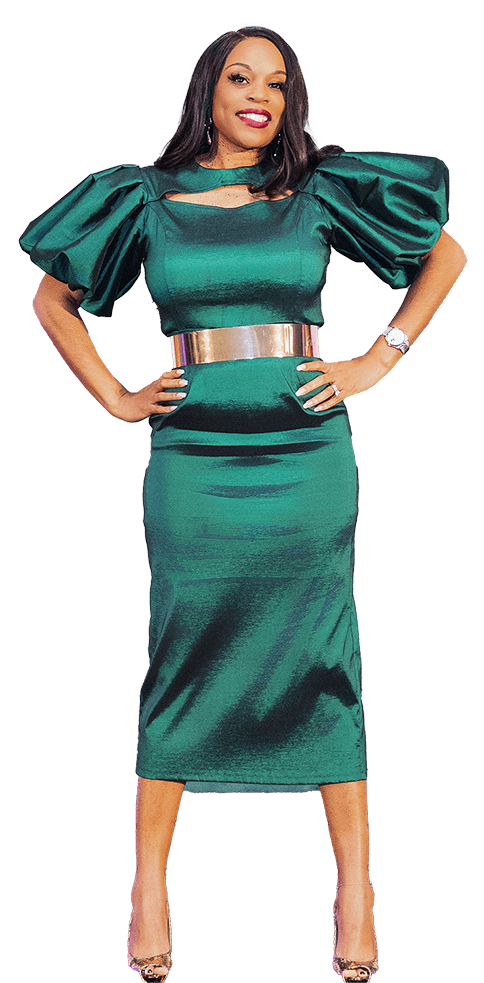
Dr. Darnyelle Jervey Harmon is an award-winning CEO, keynote speaker, and the creator of the Move to Millions® Method.
As the CEO of Incredible One Enterprises®, she helps established entrepreneurs and small business owners merge strategy with soul leadership to scale to seven figures and beyond without sacrificing peace, power, or purpose. Through her work, she has helped 85 entrepreneurs achieve their first or next seven-figure year while building businesses that fund legacies and embody overflow since 2021.
