


One of the greatest misconceptions in entrepreneurship is the belief that owning a business automatically makes someone a CEO.
The truth is that many business owners never fully make the transition.
They generate revenue. They serve clients. They hire team members. They build recognizable brands. Yet despite their success, they continue operating as the primary engine behind nearly everything that happens inside the business. The company may have grown, but their role has remained largely unchanged.
This distinction matters more than many entrepreneurs realize.
A business owner focuses on doing the work required to keep the business moving. A CEO focuses on building an organization capable of producing results consistently and predictably. One role is centered on execution. The other is centered on leadership.
Unfortunately, the habits that help entrepreneurs build a successful business often become the very habits that prevent them from scaling it.
According to research from the employee engagement platform Gallup, managers influence as much as 70 percent of team engagement. Leadership matters. Yet many entrepreneurs spend so much time managing daily operations that they never create the space necessary to lead strategically.
As a result, they become trapped in what I often call operator mode.
Operator mode is the place where the business cannot move without you. Every important decision flows through you. Every challenge eventually lands on your desk. Every opportunity requires your direct involvement. While this level of control may feel responsible, it often creates a ceiling that limits both the entrepreneur and the business.
If growth has begun to feel heavier than it should, one of these leadership patterns may be keeping you stuck.
- You Measure Your Value by How Much You Do
Many entrepreneurs built their businesses through personal effort.
They made the sales calls, delivered the services, solved the problems, and wore every hat imaginable. Their willingness to do whatever was necessary became one of their greatest strengths.
The challenge is that success can make this pattern even harder to release.
When a business begins generating consistent revenue, many owners continue measuring their value by how involved they are.
Being busy feels productive. Being needed feels important. Solving problems creates a sense of contribution. Over time, doing becomes deeply connected to identity.
The problem is that CEOs create value differently than operators.
A CEO’s greatest contribution is not completing tasks. It is creating clarity, direction, vision, and alignment. Their value comes from leadership, not labor.
Yet many entrepreneurs struggle to embrace this shift because it feels unfamiliar. They worry they are not contributing enough when they are no longer deeply involved in execution. They question whether they are earning their success if they are not constantly working for it.
As a result, they remain trapped in responsibilities that should have been delegated long ago.
The irony is that the more time leaders spend doing, the less time they have available for the work that only they can do.
2. You Make Every Decision Yourself
Decision-making is one of the clearest indicators of whether someone is operating as a CEO or an operator.
In many small businesses, nearly every decision requires the owner’s involvement. Team members seek approval before taking action. Questions flow upward. Problems escalate quickly. Even relatively minor decisions end up waiting for the entrepreneur’s response.
Initially, this level of involvement may seem harmless. After all, the owner wants to maintain quality, consistency, and control.
Over time, however, this approach creates a dangerous bottleneck.
Every decision requires attention. Every interruption pulls focus.
Every approval consumes mental bandwidth. Eventually, the entrepreneur becomes overwhelmed not because the business is too complex, but because they have positioned themselves at the center of everything.
Meanwhile, team members become less confident in their own judgment because they have been conditioned to seek permission instead of ownership.
Strong organizations are built by leaders who create decision-making capacity throughout the business. They establish clear expectations, provide guidance, and empower others to solve problems without constant oversight.
The goal is not to make every decision.
The goal is to build a team capable of making good decisions.
3. You Stay Focused on Today’s Problems Instead of Tomorrow’s Opportunities
Perhaps the most subtle leadership pattern that keeps entrepreneurs stuck in operator mode is an excessive focus on immediate concerns.
Operators naturally focus on what is happening today. They address urgent issues, manage current projects, respond to client needs, and solve pressing challenges. Their attention is pulled toward whatever requires action in the moment.
CEOs, on the other hand, must balance today’s realities with tomorrow’s possibilities.
They think about market shifts, strategic partnerships, team development, innovation, positioning, and long-term growth. They create space to evaluate where the business is heading rather than focusing exclusively on where it is today.
The difficulty is that immediate problems always feel more important.
A client issue demands attention now.
A team challenge needs resolution today.
An operational breakdown feels urgent.
Meanwhile, strategic thinking often feels optional because there is no immediate consequence for postponing it.
Until there is.
Many entrepreneurs discover too late that they have spent years managing the present while neglecting the future. By the time growth stalls, opportunities are missed, or competitors gain ground, the lack of strategic leadership becomes impossible to ignore.
Scaling requires more than managing what exists.
It requires creating what comes next.
The Move to Millions Perspective
One of the most significant shifts on the journey to seven figures and beyond is recognizing that your business cannot outgrow your leadership.
Many entrepreneurs assume their next level will come from a better strategy, a stronger offer, or a more effective marketing campaign.
While those elements matter, they are rarely the true constraint.
More often, the constraint is leadership capacity.
The business is waiting for the owner to stop acting like the most valuable employee and start functioning as the CEO.
That transition is not always comfortable. It requires releasing control, empowering others, and redefining what contribution looks like. It requires trusting that your value is not determined by how much you do but by how effectively you lead.
The entrepreneurs who successfully make this shift discover something powerful.
Growth becomes lighter.
Decision-making becomes clearer.
Teams become stronger.
The business becomes less dependent on constant personal effort.
Most importantly, they gain the freedom to focus on the work that actually creates scale.
Because the goal was never to build a business that keeps you busy.
The goal is to build a business that grows because of your leadership, not because of your labor.
Source
Gallup Workplace Research:
About
DR. DARNYELLE JERVEY HARMON
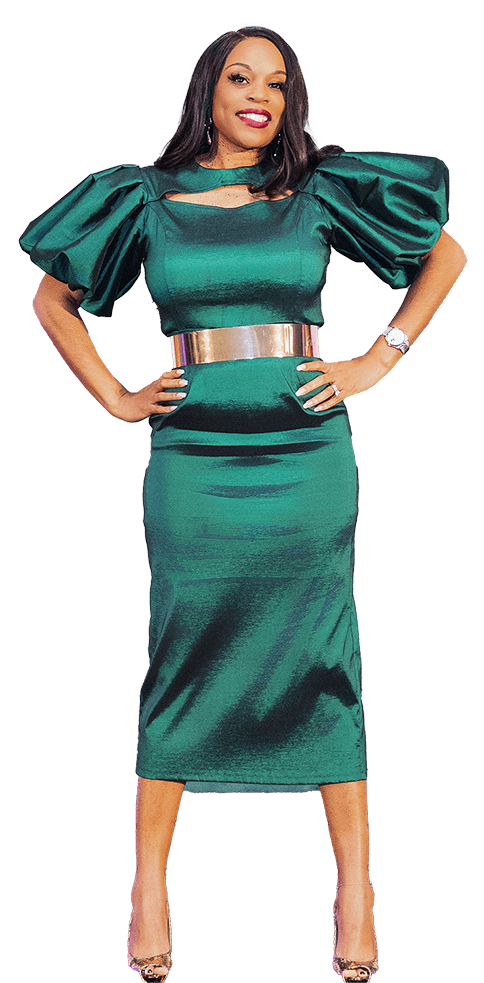
Dr. Darnyelle Jervey Harmon is an award-winning CEO, keynote speaker, and the creator of the Move to Millions® Method.
As the CEO of Incredible One Enterprises®, she helps established entrepreneurs and small business owners merge strategy with soul leadership to scale to seven figures and beyond without sacrificing peace, power, or purpose. Through her work, she has helped 85 entrepreneurs achieve their first or next seven-figure year while building businesses that fund legacies and embody overflow since 2021.
